

On the hunt for the optimal rest interval
Many myths and legends surround the optimal rest period between training sets. In the following article, we want to go in search of the truth. One thing up front: The topic is admittedly not entirely straightforward, and the article is definitely too long to read during a rest interval – but staying with it is worthwhile. Promise.
On the one hand, we see people in the gym who meticulously control their rest periods with their smartphone timer. For reasons of time efficiency, this is certainly a legitimate method, although it sometimes gives off a vibe of obsessive-compulsive disorder.
On the other hand, there are the candidates who catapult their rest times to astronomical heights through excessive use of their smartphones and the associated media consumption – sometimes without even realizing it. Hypnotized, these individuals stare at the screen, blocking equipment and machines, to the detriment of all other gym-goers.
In today's WEIDERbildung, we show you how you can avoid being unpleasantly conspicuous in the gym, neither through neurotic behavior nor through your mere presence, and also optimize your muscle growth – because, in addition to its effect on your social status in the gym, the rest period also influences good old hypertrophy.
Disclaimer: This primarily concerns muscle growth, not the sole increase in strength, as is the case in powerlifting, for example.
Short rests: Pump yes, muscle building no?
Most trainers in the gym will probably tell you something about 1–3 minutes of rest. Spoiler alert: They're not entirely wrong with that statement.
In practice, short rest periods maximize blood flow and cellular hydration status (thus providing the famous pump) and, in theory, metabolic stress (which likely contributes to muscle growth, cf. Schoenfeld 2010).
Despite these two effects of short rest periods, there is no scientific evidence that they are also accompanied by long-term effective improved muscle building. Most studies showed no advantages of short rests over longer rests in terms of muscle growth, as summarized by Henselmans and Schoenfeld in a 2014 paper. In fact, one of the studies examined even showed the opposite: shorter rest periods could have a detrimental effect on muscle growth. The reason for this is that too short a rest period can negatively affect performance in the subsequent set.
If your rest is too short, you will most likely manage fewer repetitions in the subsequent training set, which reduces your total training volume (see also Miranda et al. 2009; Grgic et al. 2017). Less training volume can ultimately mean suboptimal muscle growth.
What about hormones?
But what about the influence of rest time on hormones? Most people will already know that strength training can affect the hormone balance. While very short rests (30 seconds to 1 minute) can promote growth hormone secretion, they simultaneously temporarily worsen the testosterone-to-cortisol ratio (compared to rests > 2 minutes). That high stress hormone levels do not necessarily favor muscle building should be self-explanatory.
However, it should be noted here that the body seems to adapt its endocrine (hormonal) response to training. After a longer training period (weeks, months), the training-induced hormone secretions normalize. Overall, it does not seem that the "anabolic hormonal response" to the training stimulus has a significant long-term impact on muscle growth. The data situation is still too contradictory to draw a concrete conclusion or even make recommendations here.
Study situation: What do the data show?
Another paper by the absolute luminary in the field of hypertrophy, Brad Schoenfeld, and his colleagues concluded that longer rest periods between training sets positively influence both strength gain and muscle growth (Schoenfeld et al. 2016).
The authors divided the (experienced) subjects into two groups and had them perform a full-body workout consisting of seven exercises (3 sets of 8–12 repetitions per exercise) three times a week for eight weeks. While the first group rested for one minute between sets, group two was allowed to recover for a full three minutes before returning to the weights. The study's measurement points were maximum strength (1RM – one repetition maximum, i.e., the maximum weight with which one repetition can be performed) in bench press and squats before and after the study, muscular endurance (50% 1RM bench press to muscular failure), and muscle thickness of biceps, triceps, and quadriceps (measured by ultrasound).
Apart from muscular endurance, the longer rest period proved beneficial for all other parameters. The subjects who rested for three minutes between sets were able to increase their maximum strength significantly more and build more muscle in the biceps, triceps, and quadriceps compared to the group that rested for one minute. There was no difference in training volume (weight × number of repetitions × number of sets) between the two groups examined.
Also in 2016, Fink and colleagues published a paper (initially online, then in the journal "Clinical Physiology and Functional Imaging" in 2018) in which they investigated the effect of rest periods on metabolic stress and muscle growth. Interestingly, a "short rest, low load" group, who took only 30 seconds rest between sets and performed 20 repetitions per set, was compared with a "long rest, high load" group, who took three minutes rest between sets and performed eight repetitions per set. The acute growth hormone secretion after training and the muscle mass of the upper arm were compared. Here, too, the training volume of the two groups was similar.
Result: no significant difference in muscle thickness between the two groups. Although the group with shorter rest periods showed a significantly higher acute growth hormone secretion, this did not correlate with increased muscle growth after 8 weeks (study duration) compared to the group with longer rest periods between sets. Regarding muscle strength, only the group with longer set rests showed a significant improvement.
A year later, another study by Fink and colleagues (including the aforementioned Brad Schoenfeld this time) was published. Here, a set rest of 30 seconds was compared with a set rest of 2.5 minutes (150 seconds). Both groups of subjects trained twice a week for 8 weeks with 40% of their 1RM. Since hypertrophy, strength gain, and hormonal responses could be achieved equally in both groups, the rest time does not seem to play a significant role when training with low training weights. However, a prerequisite for the aforementioned adaptations is reaching muscle failure.
Longo and colleagues (Brad Schoenfeld was also one of the co-authors here) investigated the issue of training volume in a paper published in 2020. They examined two different rest periods (1 minute vs. 3 minutes) with different or adjusted total volumes. Over a period of 10 weeks, it was shown that rest time had no influence on the development of strength or muscle growth in this sample, but training volume did. Regardless of the rest time, the (previously untrained) subjects who trained with more volume also built more muscle mass than those with short or long rest, but with the volume of the short rest group. Complicated, isn't it? It becomes more complicated when considering that the two legs of the subjects were each assigned to different groups, i.e., the legs were trained unilaterally under different conditions.
Conclusion: How long you should rest
Before all this gets even more confusing, let's slowly come to a conclusion: Of course, all the studies mentioned have certain limitations, such as the small number of participants or the lack of control over nutrition. As is so often the case in science, it means: We need more data to be able to make a final assessment of the topic.
What can be stated, however: You should take enough rest so that your performance in the next set does not suffer from too short a recovery period and your total training volume does not decrease. Here, trial and error applies – practice makes perfect. For very intense sets, two to three minutes of rest is certainly a good idea.
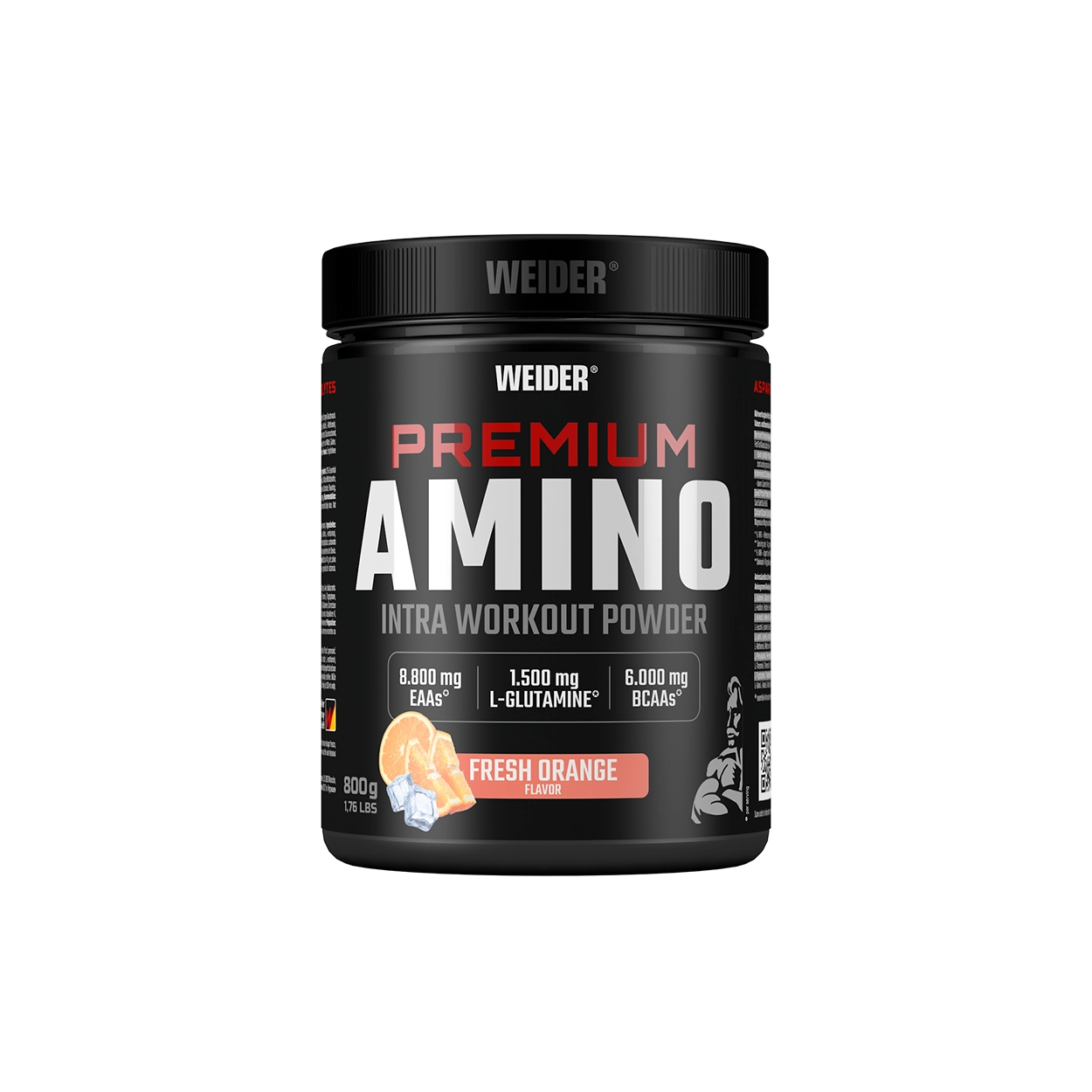
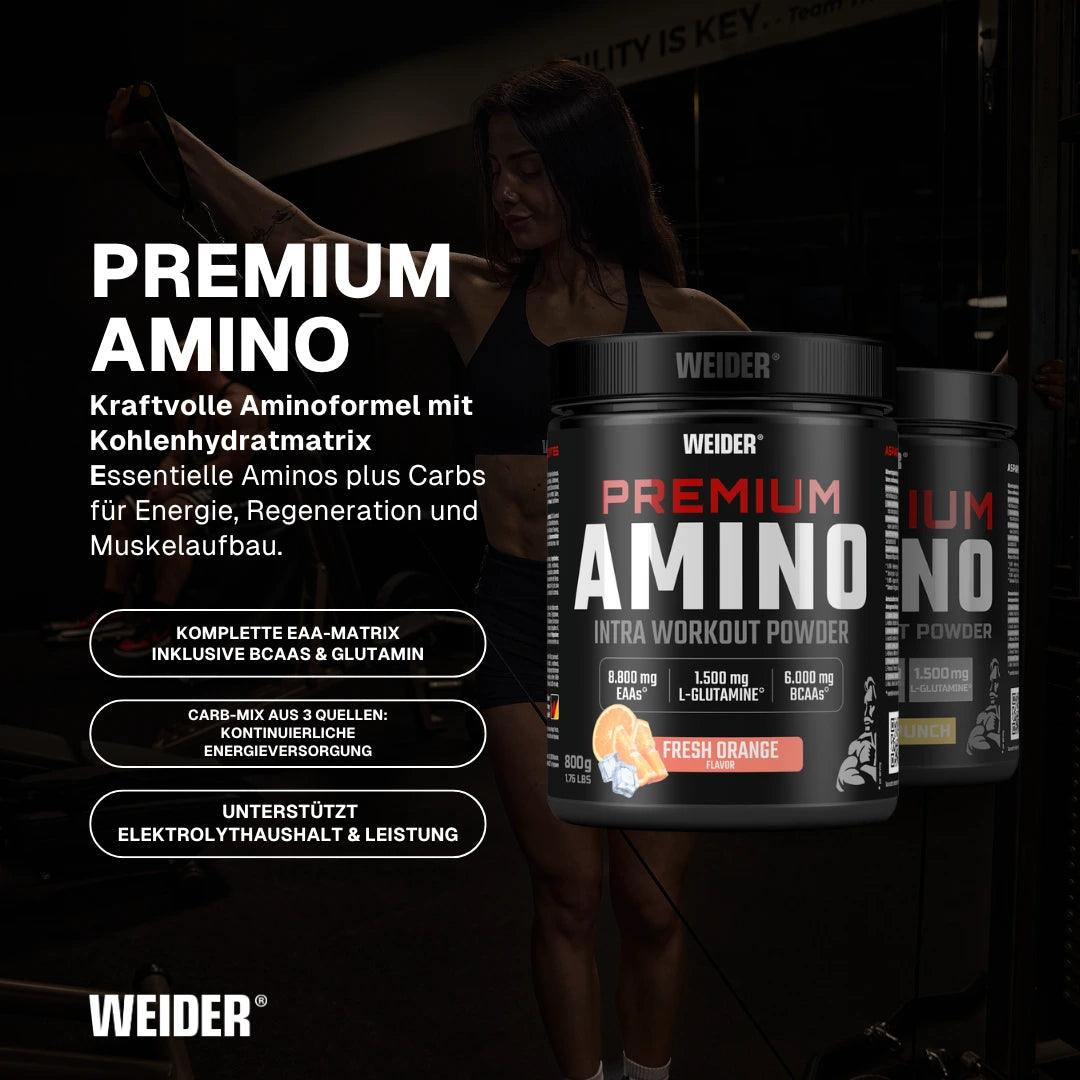
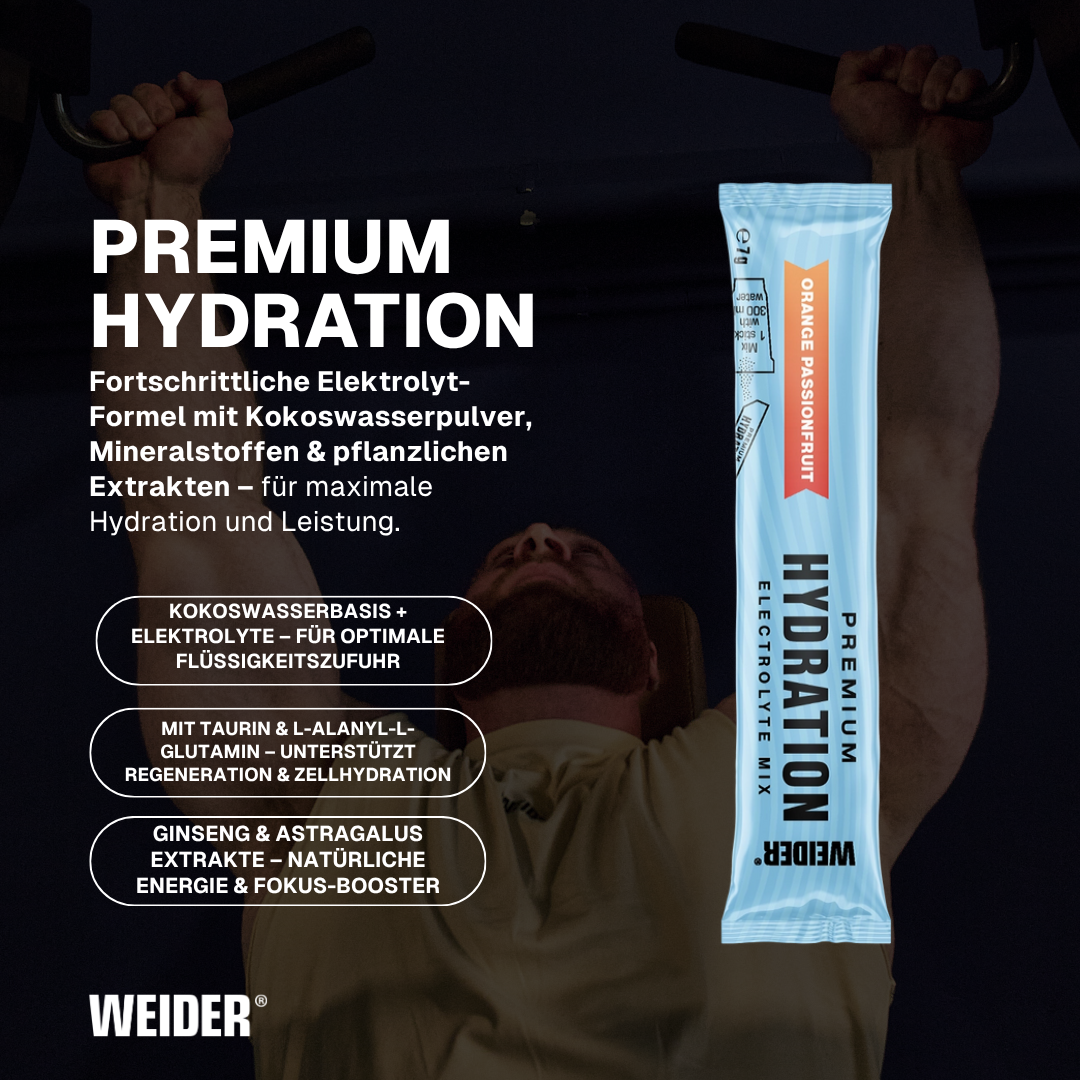
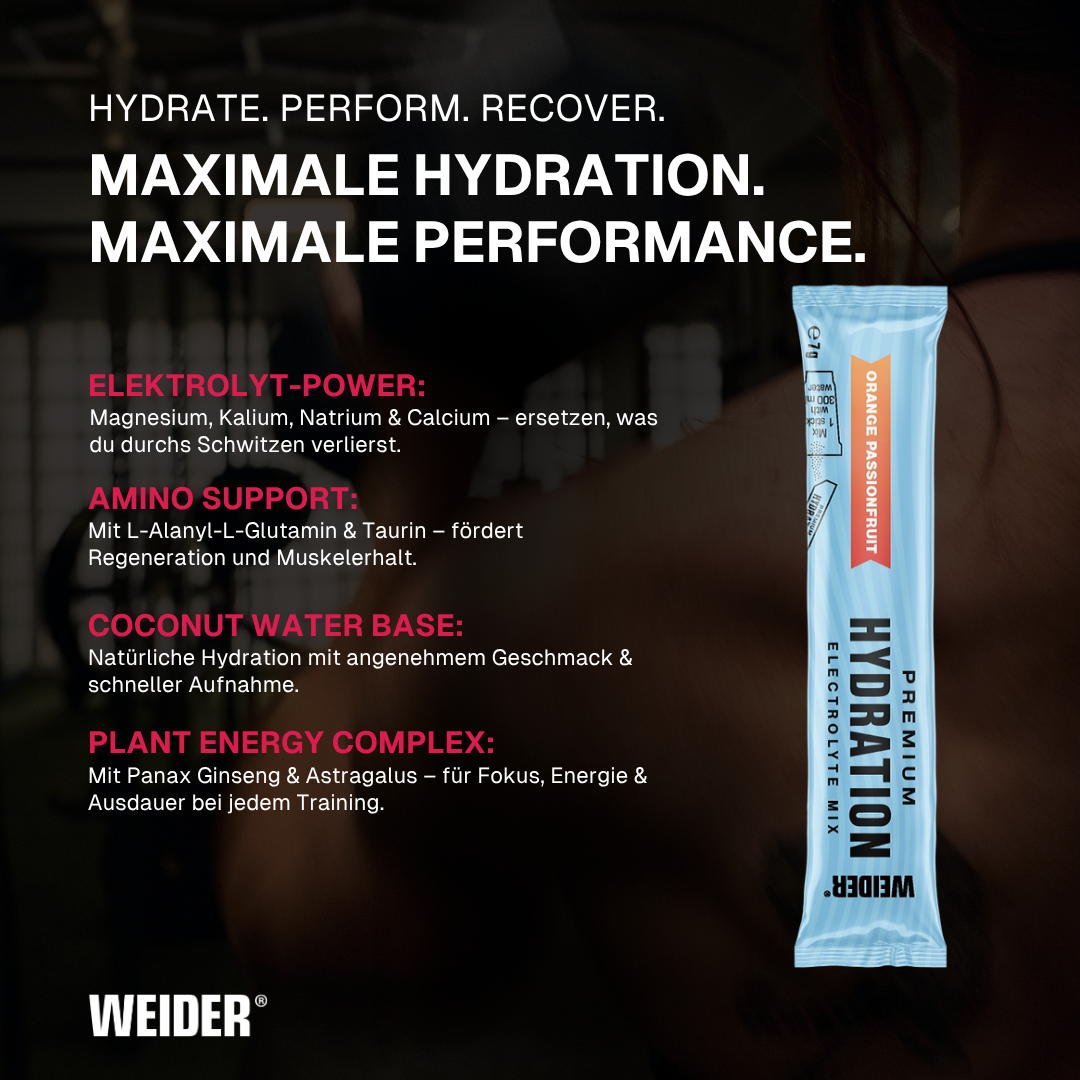
By the way, the break can be used perfectly to enjoy a sip of a delicious WEIDER intra-workout drink. For this, we recommend our tasty Premium EAAs, our carbohydrate-rich Premium Amino, or our refreshing Premium Hydration.
If you belong to the faction of gym-goers who (rightly) allow themselves slightly longer breaks between heavy working sets, always be polite and courteous and take turns with others. Who knows, maybe you'll even find a new gym buddy this way?
P.S.: Using your smartphone during training is perfectly fine when it comes to replenishing your supplement supplies by placing an order in the WEIDER shop. We are once again showing our most generous side and are giving you 20% off your next order* at this point – with the code PAUSE20
* Valid from 15.08. to 30.11.2026 on all discount-eligible products, with a minimum order value of €79.





Share:
Creatine for sleep deprivation? What's behind the white powder for improved focus?
Collagen Basics: What Your Body's Most Abundant Protein Really Does